Every difficult IT project has a moment when the work becomes larger than the document. A report that "should include the regional split" turns into a data warehouse project. A migration that "just needs the files moved" discovers twelve years of duplicate folders and no owner. Scope creep is not a personality flaw; it is a missing boundary.

Good scoping is not about writing a longer contract. It is about making the boundaries visible early, pricing the uncertainty honestly and giving both sides a calm way to change their minds. This guide covers the document, the discovery process and the commercial models that make it stick.
Start with the outcome, not the deliverable
"Build a new intranet" is a deliverable. "Reduce the time it takes a new employee to find a policy from twenty minutes to two" is an outcome. Outcomes are harder to write and much more useful, because they let the consultant propose a smaller solution than the one in the brief.
Ask three questions for every requested feature:
- What decision or action does this enable?
- Who does it for, and how often?
- What happens if we do not build it in this phase?
If the answer to the third question is "nothing important", the feature belongs in a later phase or not at all.
The eight sections of a usable scope
| Section | What it contains | Why it matters |
|---|---|---|
| 1. Context | The business problem and why now | Anchors every later decision |
| 2. Outcomes | Measurable changes in the business | Defines success beyond delivery |
| 3. In scope | Specific deliverables, systems, users and locations | Creates the boundary |
| 4. Out of scope | Explicit exclusions, including tempting adjacent work | Prevents assumptions becoming obligations |
| 5. Assumptions | What must be true for the estimate to hold | Turns hidden risk into a conversation |
| 6. Dependencies | Client decisions, access, data and third parties | Shows where delays will come from |
| 7. Acceptance | How each deliverable will be reviewed and signed off | Ends the "I will know it when I see it" loop |
| 8. Change control | The process, owner and pricing for changes | Makes change manageable instead of hostile |
Write the out-of-scope list first
The out-of-scope section is the most valuable page in the document. List the things a reasonable person might assume are included: data cleansing beyond a stated threshold, content migration, training, integrations with legacy systems, ongoing support, accessibility remediation, procurement and legal review.
Be specific. "Data migration is out of scope" is weak. "Migration of the 12,000 records in the current CRM is included; cleansing duplicates, mapping custom fields and migrating attachments are out of scope" gives both sides something to discuss.
Discovery before commitment
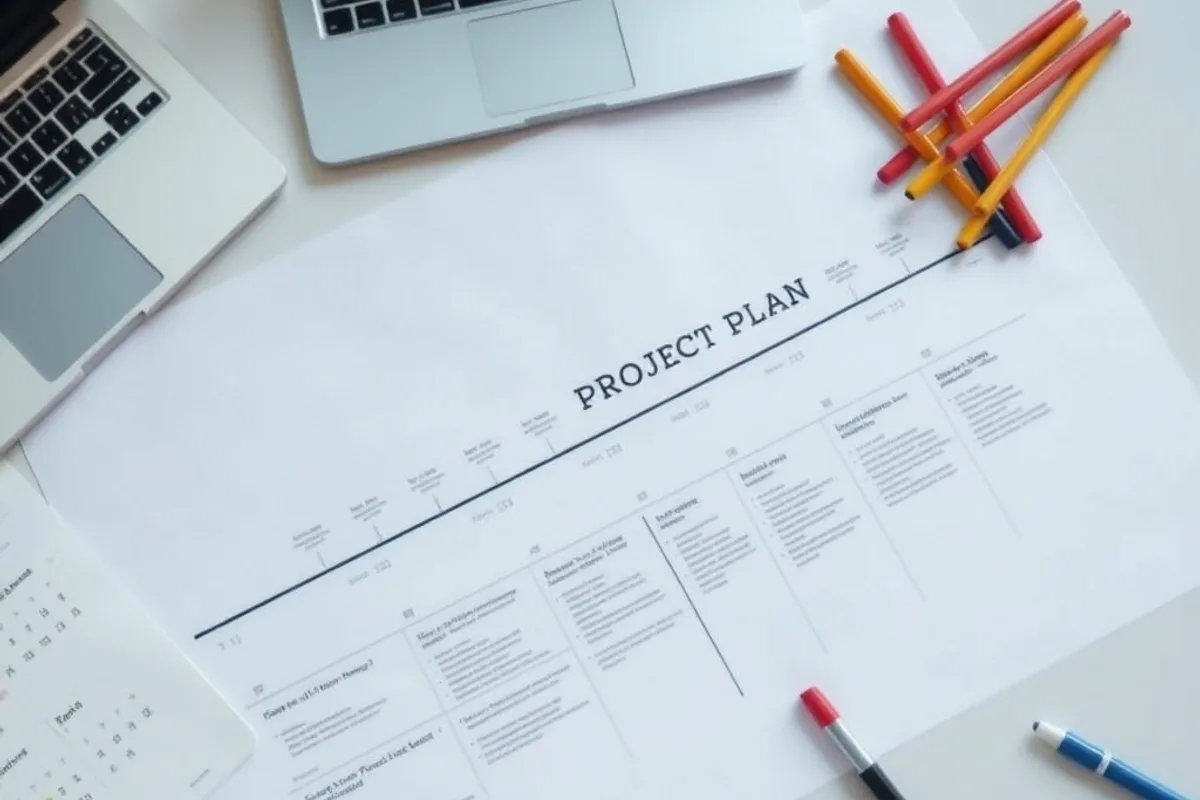
Fixed-price proposals for poorly understood work are a transfer of risk from client to consultant, and the consultant prices that risk into the fee. A short paid discovery changes the economics. Two to four weeks of interviews, data review and a technical spike produces a scope both sides can trust.
Discovery deliverables should include a current-state map, a recommended approach, a cost range, the top five risks and a decision on whether to proceed. If the client is not willing to pay for discovery, treat that as information about how the project will be governed.
Estimate in ranges, then narrow
An estimate is not a promise. Present three numbers: the likely case, the low case if assumptions hold and the high case if a named risk materialises. Explain what would move the project from one to another.
Use historical data where you have it. If similar integrations took six to nine weeks, do not quote four because the client has a deadline. The deadline is a constraint to design around, not a reason to lie about effort.
Choose the pricing model deliberately
| Model | Best for | Watch out for |
|---|---|---|
| Fixed price | Well-defined, repeatable work | Scope disputes; padding for unknown risk |
| Time and materials | Discovery, evolving products | Budget anxiety; requires weekly visibility |
| Capped time and materials | Uncertain work with a budget ceiling | What happens when the cap is reached |
| Retainer | Ongoing support and advisory | Vague availability; no priority rules |
| Outcome-based | Measurable, attributable results | Attribution disputes; long measurement windows |
Most IT consulting engagements work best as a fixed price for a defined phase followed by time and materials for the next phase. The client gets certainty where it is achievable and flexibility where it is not.
Run change control without friction
Change control fails when it feels like punishment. Make it a normal, low-drama conversation: any request that changes scope gets a one-page note describing the impact on timeline, cost and risk, with a decision by a named person on each side.
- Log the request and the reason.
- Estimate the impact within two working days.
- Offer options: do it now, defer it, or replace something of equal size.
- Record the decision in writing.
- Update the plan and the budget before work starts.
A healthy project may have several changes. A healthy change process makes them visible rather than letting them accumulate as resentment.
Governance that fits the size of the project
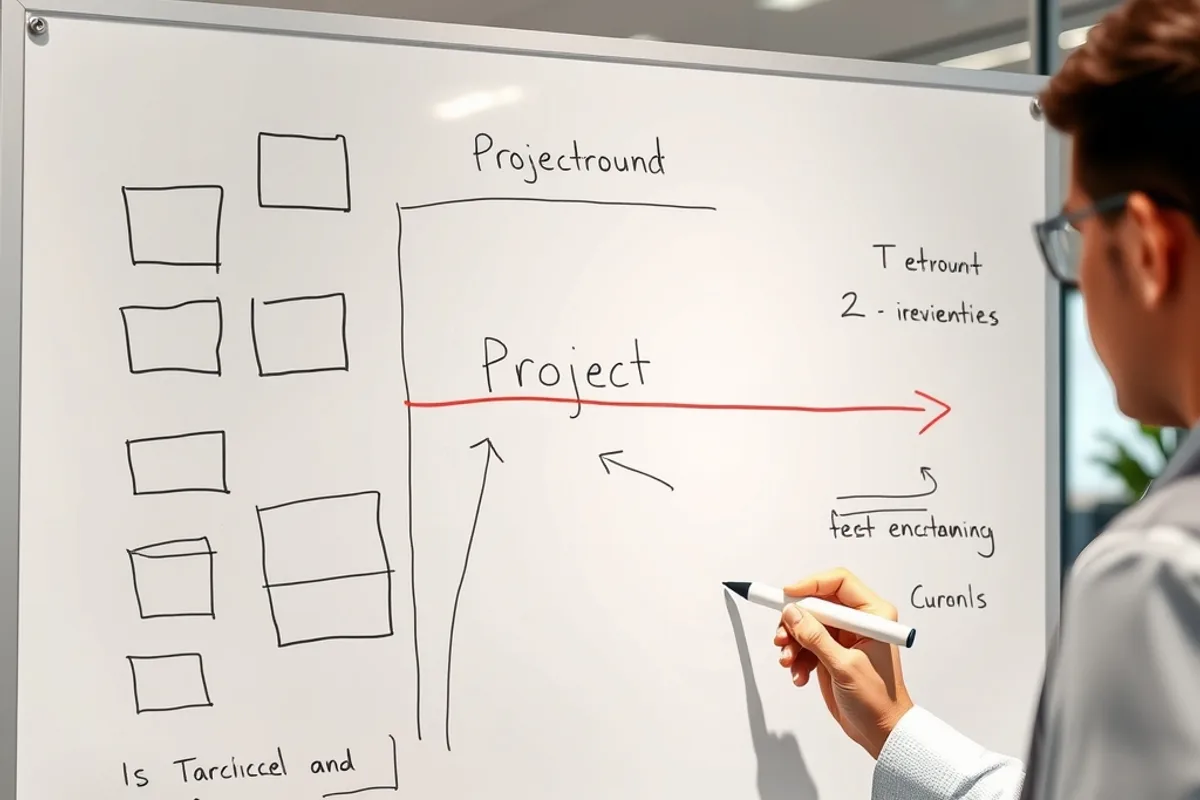
A small project needs a weekly thirty-minute call, a shared decision log and one owner on each side. A larger programme needs a steering group, a risk register and a monthly report. Do not import enterprise governance into a six-week engagement; it adds cost without adding control.
Define who can approve a change, who can accept a deliverable and who can stop the work. If those are three different people, say so before the first invoice.
Red flags during scoping
"We will define the requirements as we go." Fine for discovery, dangerous for a fixed price.
No named business owner. IT projects without a business decision-maker stall at every choice.
Access is "someone else's problem". Missing access is the most common cause of week-one delay.
The deadline is before the discovery. A date chosen before the facts is a wish, not a plan.
Success is never defined. If nobody can describe what "done" looks like, nobody can accept it.

A one-page scope checklist
- The business outcome is written in one sentence and has a measure.
- In-scope and out-of-scope lists are specific enough to argue about.
- Assumptions name the risk, not just the hope.
- Client dependencies have owners and dates.
- Acceptance criteria are testable.
- Change control names the approver and the pricing rule.
- There is a plan for what happens if a key assumption fails.
The bottom line
Scope creep is usually a symptom of an unclear agreement, not a difficult client. Write the outcome, draw the boundary, name the assumptions and make change easy to discuss. The project that starts with an honest scope ends with a better relationship and a smaller invoice than the one that starts with a optimistic guess.
Use the checklist on the next proposal you write. If you cannot fill in all seven lines, you are not ready to quote a fixed price, and the client is better served by a discovery phase than by a confident number.